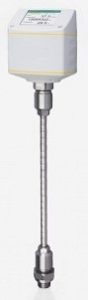
Measuring compressed air consumption is critical because compressed air is one of the most expensive forms of energy used in industry and marine systems. Without proper measurement, it is difficult to control costs, detect inefficiencies, or ensure reliable operation.
Key reasons include:
Energy efficiency: Compressors consume significant electrical power. Monitoring usage helps reduce energy waste. Leak detection: Air leaks can account for large losses; measurement helps identify abnormal consumption. Cost control: Knowing how much air is used allows better budgeting and operational optimization. System optimization: Helps size compressors and storage tanks correctly and avoid overloading equipment. Reliability and safety: Ensures sufficient air supply for critical systems (e.g., engine starting on ships). Preventive maintenance: Sudden changes in consumption can indicate faults or worn equipment.
Applications of Measurement:
Compressed air consumption measurement is used in:
Industrial plants: Monitoring production lines and pneumatic tools
Marine systems: Tracking starting air and service air usage on ships
Energy management systems: Improving overall plant efficiency
Leak detection programs: Identifying and fixing losses
Automation and control: Optimizing system performance in real time
Audits and reporting: Supporting energy-saving initiatives and compliance
We offer compressed air metering systems that can:
Measure exact consumption, give you weekly or monthly read outs for cost accounting and employee information.
Determine peak consumption so that you know whether your compressor supply enough air or whether you have to expect bottle-necks
Determine each pneumatic device consumption as well as diagnose if the tubes have the right diameter, if the machine is optimally adjusted, and identify wear & tear trend of machines.
Assist you in cost accounting per department or large machine.
Improve cost calculations and cost consciousness.
Assist you in leakage detection
Monitor air-consumption during non production times to identify increasing leakage of air.
There are different models to select from in-line and on-line methods of installation.
The Sigma 401 series flow sensor is based on the thermal mass flow principle. It measures volumetric standard flow over a wide measuring range. The result is pressure and temperature independent.
The sensor installation into the pipe is done through a ½” ball valve. This makes it possible to do the installation under pressure without shutting down the compressed air line.The sensor is available in two measuring ranges and with or without display. The version with display shows the actual volumetric flow and the total consumption. Via the keyboard tube diameters and the consumption counter can be set.
Every sensor includes an analogue output (4…20mA) for flow and an isolated pulse output for the consumption counter.
Special Features
Integrated display for m3/h and m3
Depth scale for accurate installation
Usable from 1/2” to 12” (DN 300)
Easy installation under pressure
4…20 mA analogue output for m3/h resp. m3/min
Pulse output for m3
Inner diameter adjustable via keypad
Consumption counter resettable
Insertion type sensor for installations under pressure
Thermal mass flow, independent of pressure and temperature changes
Technical data
Measured unit m3/h, m3/min, l/min, cfm
Accuracy +- (3% of measured value + 0.3% full scale)
Medium Air, gas, non explosive
Operating temperature -30 … 140 ºC probe tube
-30 … 70 ºC casing
Operating pressure Up to 50 bar
Analogue output : 4 … 20 mA Scaling: 0 … max range
Pulse output 1 pulse per m3
Power supply 12 … 30 VDC, 100 mA
Volumetric Flow ranges
Inch
mm
Standard [m3/h]
Max [m3/h]
1″
27.3
0.5…150
0.6….320
2″
53.1
2…600
2.5….1200
3″
84.9
5…1600
7….3400
4″
100.3
9…2700
12….5700
5″
133.7
13…4000
18….8400
6″
162.3
18…5800
25…12000
8″
200.0
26…8800
33…18000
10″
250.0
40…13700
52…29000
12″
300.0
60…19800
80…40000
The stated flow rates are standard flows at 20 ºC and 1000 mbar
Applications (*)
compressed air
nitrogen
argon
helium
CO2
(*) state type of gas on order
Precise installation and removal under pressure
Alignment aid
Precise installation with alignment aid included in set
The consumption sensor S421 is based on the thermal mass flow principle. It measures volumetric standard flow over a wide measuring range. The result is pressure and temperature independent. S421 is an in-line type sensor which is mounted into the pipe. There are 7 models available for ¼”, ½”, ¾”, 1” , 1 ¼”, 1 ½”, and 2” tubes. The version with display shows the actual volumetric flow and the total consumption. The consumption counter can be set via the keyboard. Various settings such as gas type, flow unit, reference standards, can be set ex factory or through our service kit. The service kit consists of a PC software and an interface box which connects the sensor to the USB port of the PC. Every sensor includes an analogue output (4…20mA) for flow and an isolated pulse output for the consumption counter.
Features
In-line type for high accuracy in small tube diameters.
Particular suitable for measuring process gases such as N2, Ar, He etc.
Thermal mass flow, independent of pressure and temperature changes
Easy installation
Very fast response time
Applications for S421
compressed air balancing
compressed air consumption measurement
leakage air / leak rate determination
mobile compressed air measurement in front of single machines / plants
flow measurement of process gases like e. g. nitrogen, CO2, oxygen, argon, nitrous oxide
flow measurement at nitrogen generators
Technical data
S421 Measured unit m3/h, m3/min, l/min, cfm
Accuracy +- (2% of measured value + 0.3% full scale)
Medium Air, non explosive gases (N2, O2, CO2, N2O, Ar)
Operating temperature -30 … 80 ºC
Operating pressure Up to 16 bar (optionally up to PN 40)
Analogue output Signal: 4 … 20 mA
Scaling: 0 … max range
Pulse output 1 pulse per m3
Power supply 24 VDC smoothed ± 15 %
PC connection: SDI interface
Mounting thread meas. section: R 1/4″, R 1/2″, R 3/4″R 1″, R 1 1/4″, R 1 1/2″, R 2″ external thread.
Volumetric Flow Ranges
Inner tube
Measuring range
inch
dia (mm)
from
to
1/4″
8.5
0.8
90 l/min
1/2″
16.1
0.2
90m3/h
3/4″
21.7
0.2
170 m3/h
1″
27.3
0.2
290 m3/h
1 1/4″
36.8
0.7
480 m3/h
1 1/2″
41.8
1.0
550 m3/h
2″
53.1
2.0
900 m3/h
SIGMA 430 – FOR WET COMPRESSED AIR AND HIGH TEMPERATURE (up to 230 °C) APPLICATIONS FLOW / CONSUMPTION SENSOR
Sigma 430 is a high-performance pitot tube flow meter designed for accurate measurement of compressed air and industrial gases, even under wet and contaminated conditions. It is widely used in industrial environments to monitor flow, consumption, temperature, and pressure directly at the compressor outlet.
Based on the pitot tube principle, the Sigma 430 ensures long-term stability, a wide measurement range, and excellent temperature resistance, making it suitable for demanding applications.
Its insertion-type design allows installation under pressure through a ball valve, eliminating the need to stop production. The device is constructed entirely from stainless steel parts in contact with the medium, ensuring durability and resistance to harsh environments.
The Sigma 430 can measure wet air, dry air, and non-corrosive gases such as nitrogen, oxygen, or natural gas. It performs reliably even in the presence of moisture, dust, or particles, which makes it ideal for compressor discharge measurements.
Key features include:
Measurement of flow and consumption in wet or high-velocity gas applications
High temperature capability (up to ~230°C depending on configuration)
No moving mechanical parts, ensuring low maintenance
Multiple output options (analog, pulse, Modbus, etc.) for integration with PLCs and monitoring systems
Suitable for energy efficiency analysis in compressed air systems
Installation requires a G3/4″ connection and the mounting stem is graduated to simplify centering the sensor tip for pipe sizes up to 12″ diameter (DN300). Contact us for larger diameters.
Overall, Sigma 430 is a robust and reliable industrial flow sensor, ideal for optimizing compressed air systems and improving energy efficiency.